We are not taking new requests for Village Finder at the moment. If you have already sent a request, we will finish it and keep writing to you as usual.
Start with a name
Village Finder
Find the home village in Japan.
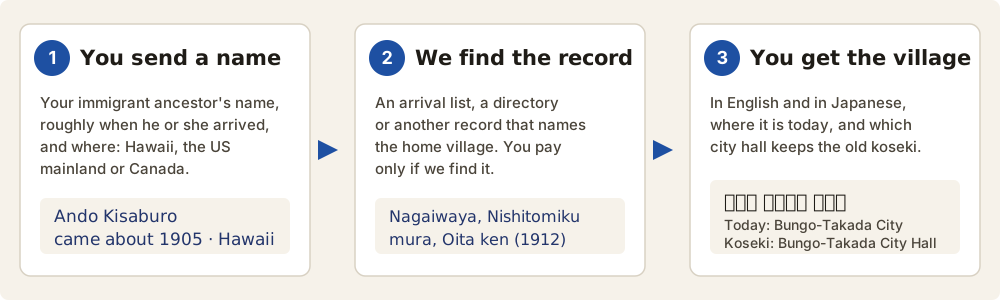
- For families who know the name of the ancestor who left Japan for Hawaii, the US mainland or Canada, but not the village he or she came from
- The village is the key to the family's koseki.
- We search the records and find the one that names the village.
- You pay only if we find it.
- Every record is checked in Japan by our founder, who reads Japanese as his first language.
What you get
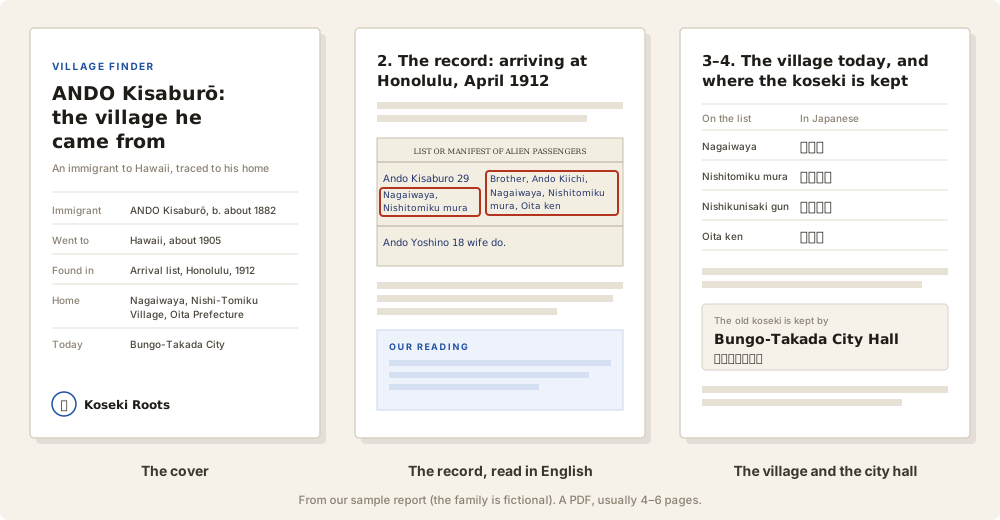
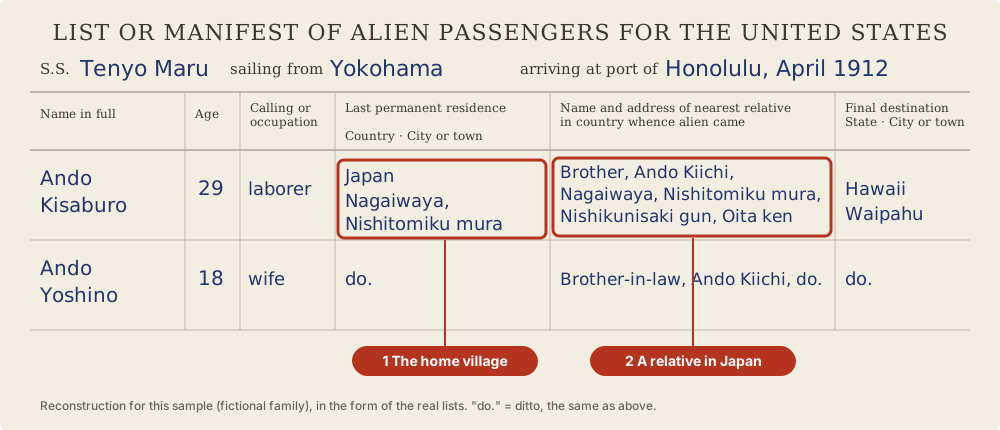
- The record that names your ancestor's home in Japan, with a clear copy for your family's personal use
- We read the record and explain it in English. From the English spellings of the place names, often handwritten, we work out the Japanese names, with the district and prefecture.
- Where that village is today, and which city or town hall keeps the family's old koseki
- How a direct descendant can request the koseki from abroad, step by step (you or your family send the request; we do not request it for you)
- Relatives the record names, such as a father or an uncle in Japan
- Format: PDF, usually 4–6 pages. The length depends on how many records we find.
Where we look
We search the passenger arrival lists of Hawaii, the United States and Canada. We also search directories of Japanese residents published in Japanese from the 1900s to the 1940s, records from the war years, and records the Japanese government kept on emigrants. Which of these we use depends on where your ancestor went and when.
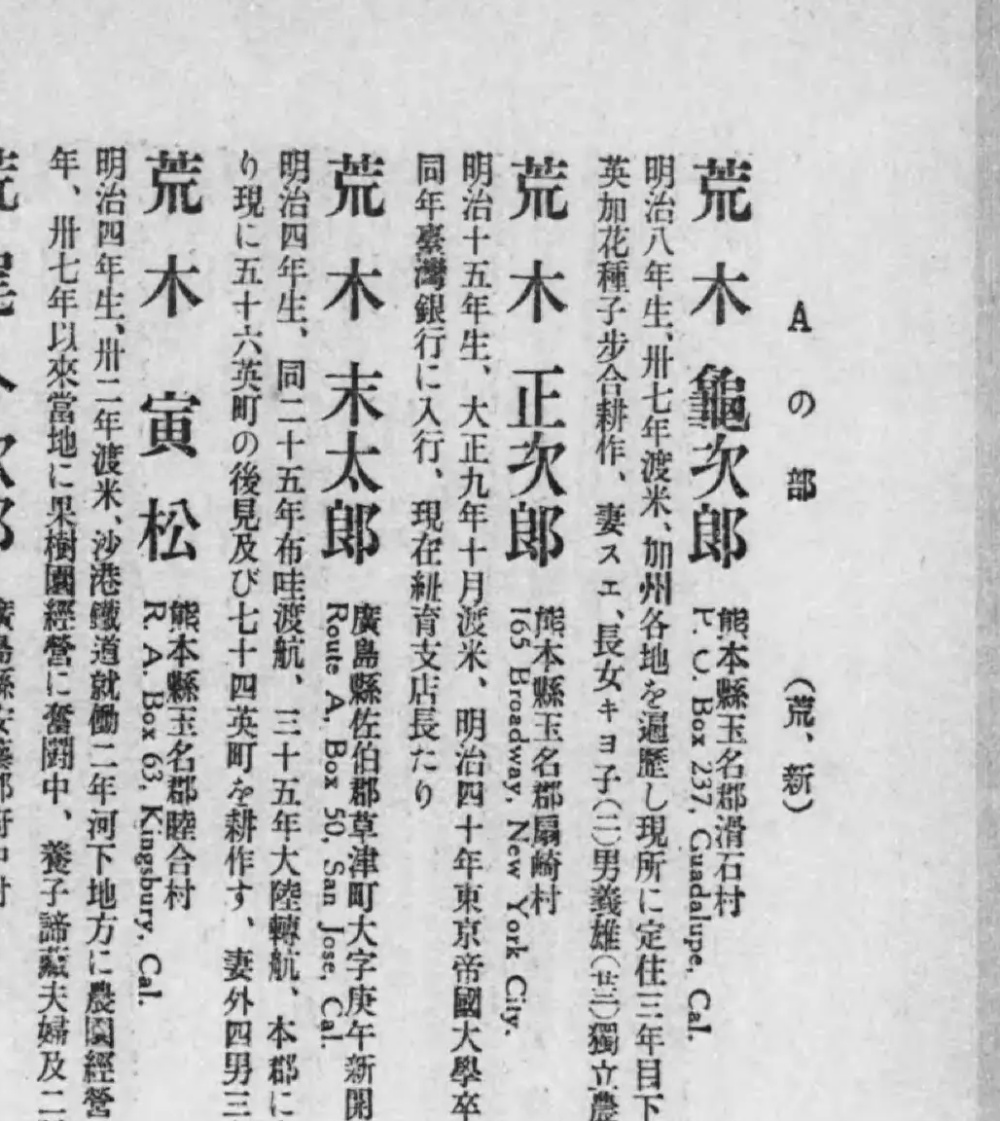
How likely we are to find the village
- Hawaii or the US mainland, arrived between 1907 and 1924: a good chance. The passenger arrival lists of those years usually give the home village or town.
- Arrived earlier, but traveled to Japan and back after 1907: also a good chance, from the list of the later voyage. Please tell us if your ancestor ever went back to Japan.
- Canada, listed as the head of a family in a 1929 directory of Japanese residents of Canada: a good chance.
- From Okinawa: a good chance, from a database of emigrants' records. Many Okinawan koseki were lost in 1945; if your family's was, we tell you what survives instead.
- Hawaii before 1900, or arrived before 1907 and never traveled again: a lower chance. The records of that time often give only "Japan".
- A wife who came to marry, often called a picture bride: the records usually give the village of her husband's family. Her own family's village is written in his family's koseki, so the next step is that koseki.
What you need to provide
- Your ancestor's name (Roman letters are fine)
- Roughly when he or she arrived, or was born
- Where he or she went: Hawaii, the US mainland or Canada
- Helpful if you know them:
- the port or ship
- any trip back to Japan
- the names of a spouse and children
- the town where the family lived
- the name in Japanese characters
Price and payment
- Send your request with the form. We search and write to you within a week.
- If we find the village or town, we tell you which year's record names it. Then we send you a payment link for $99, and the report follows about 1 week after payment.
- If the records give only the prefecture, we tell you so, and you pay nothing.
- If we find nothing, you pay nothing. We tell you which records your family could request next.
- Prices are in US dollars and include all our fees for the PDF.
- Delivery times are estimates, not guarantees. Every record gets the care it needs, so if we expect a delay, we will let you know by email.
How it fits with our other services
Once you know the village, you can request the koseki and order a Koseki Family Tree, or a Roots Report on the village and the families of your name there. Compare all services at a glance.
See a sample
The family in the sample is fictional; the kinds of records and how they are laid out are real.
Village Finder — $99, and you pay only if we find the village. Tell us about your ancestor, and we reply by email within a week.
Find my ancestor's village