About Koseki Roots
Koseki Roots is run from Chiba, Japan, by Mitsuru Otaka (大高 充; OTAKA Mitsuru in Japanese order).
My family is from Akita, in northern Japan. I am the eldest son, and in Japan the eldest son traditionally stays to carry on the family home and look after the family graves. In my generation, I was the one who left. I moved to Chiba, near Tokyo. Once I was gone, I found myself thinking more and more about the place we came from.
So I went looking. I read closed koseki (see our glossary), temple records and local histories. Along the way, I learned to read handwritten Meiji-era (1868–1912) registers and old village documents. That kind of writing takes practice, even for Japanese readers.
I only moved a few hours away. For Nikkei families, whose ancestors crossed an ocean, that feeling must be much stronger. Many ask the same question I did: where exactly did we come from, and who were they? The answers are usually there, in Japanese: a koseki, a village history, a temple's records. Someone in Japan just needs to read them.
That is why I started Koseki Roots: to read those records here in Japan, and to bring you the story of the village your family left, in English.
Before all this, I spent 38 years as an engineer at IBM Japan. I maintained large mainframe computers for business customers and taught that work to other engineers at IBM's training center. Those years taught me to check every detail and to explain complicated things plainly. Reading an old koseki and writing it up for you takes both.
Koseki Roots is the English-language service of Tsuzuri (綴, "to bind together" or "to write down"), our family history service for families in Japan. Both use the same mark, shown at the top of this page. Elsewhere on this site, Japanese names are written surname first, as in Japan.
How we work
- Read by a native reader in Japan. Every register and record is read in Japanese, checked against the original image, and only then written up in English.
- Honest about uncertainty. When handwriting is ambiguous or a link between records is not proven, we say so plainly and show our confidence.
- Sources you can check. We name every book and record we used and where it is held.
- Email only. All communication is by email, so you have everything in writing and can share it with your family.
- Your family's privacy. Your documents are used only for your order and are never published.
What we don't do
We do not file requests to Japanese government offices for you; under Japanese law that is work for a licensed administrative scrivener (gyōseishoshi). We explain how to request your family's koseki yourself. Our reports are for family history and are not certified translations.
Image credits
The photographs on this site are either our own or public-domain images from public collections. Each image carries a short credit where it appears.
- Rice fields in Senboku District and the Akita Kantō Festival, Akita Prefecture: photos by Mitsuru Otaka.
- A Japanese government file of 1888 (Meiji 21) on emigrants to Hawaii: National Archives of Japan, Kōbun ruishū (the cabinet's bound record books), call number 類00345100 (cropped).
- Japanese workers on a fruit farm in California, around 1910: Library of Congress, Prints & Photographs Division, LC-DIG-ggbain-12867 (cropped).
- Honolulu seen from Punchbowl; the torii of the Izumo shrine in Honolulu; the launch of a Japanese fishing boat in Honolulu: ホノルゝ繁昌記 (A Record of Prosperous Honolulu), 1911. National Diet Library Digital Collections, public domain (cropped).
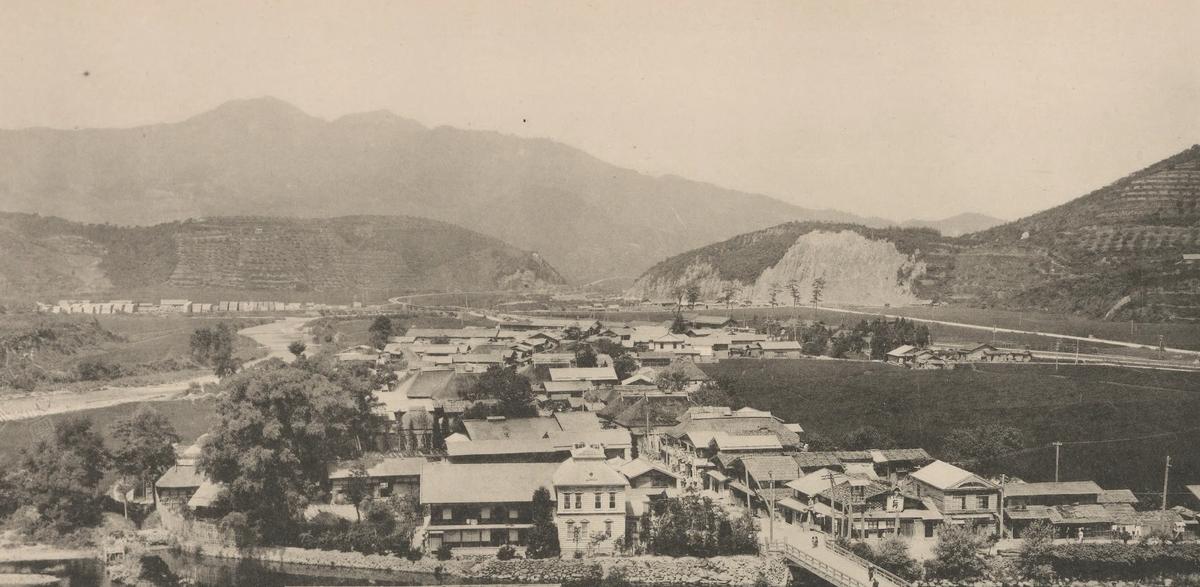
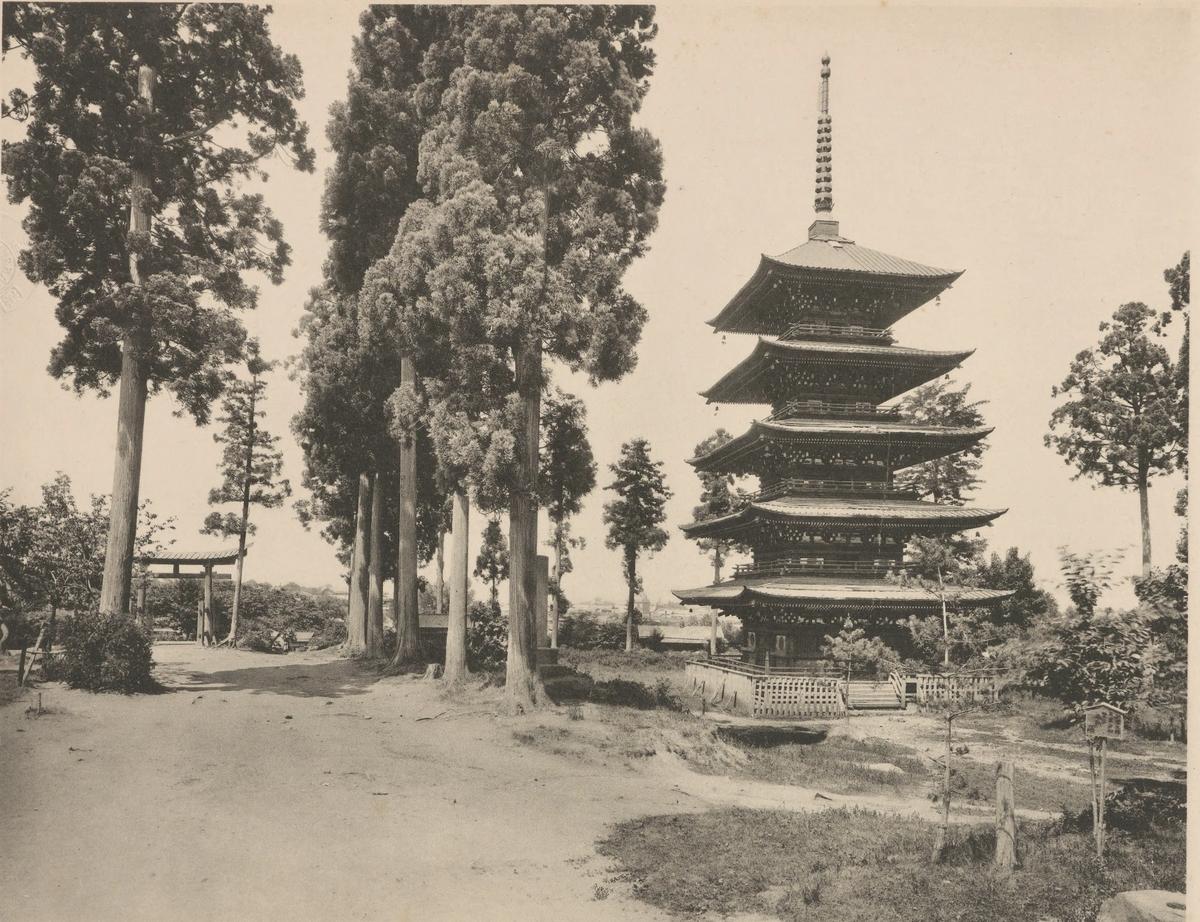
- The village of Ōwani, the pagoda of Saishō-in in Hirosaki, and an apple orchard, all in Aomori Prefecture: 青森県写真帖 (Photo Album of Aomori Prefecture), 1915. National Diet Library Digital Collections, public domain (cropped).
- A page of statistics on Japanese residents of Hawaii: 布哇日本人年鑑 第18回 (Hawaiian-Japanese Annual, 18th edition), Honolulu, 1922. National Diet Library Digital Collections, public domain (cropped).
- Rice ready for harvest; a stone torii in a cedar forest; old stone lanterns; red torii at Hanazono Inari Shrine, Tokyo: photos by Mitsuru Otaka.
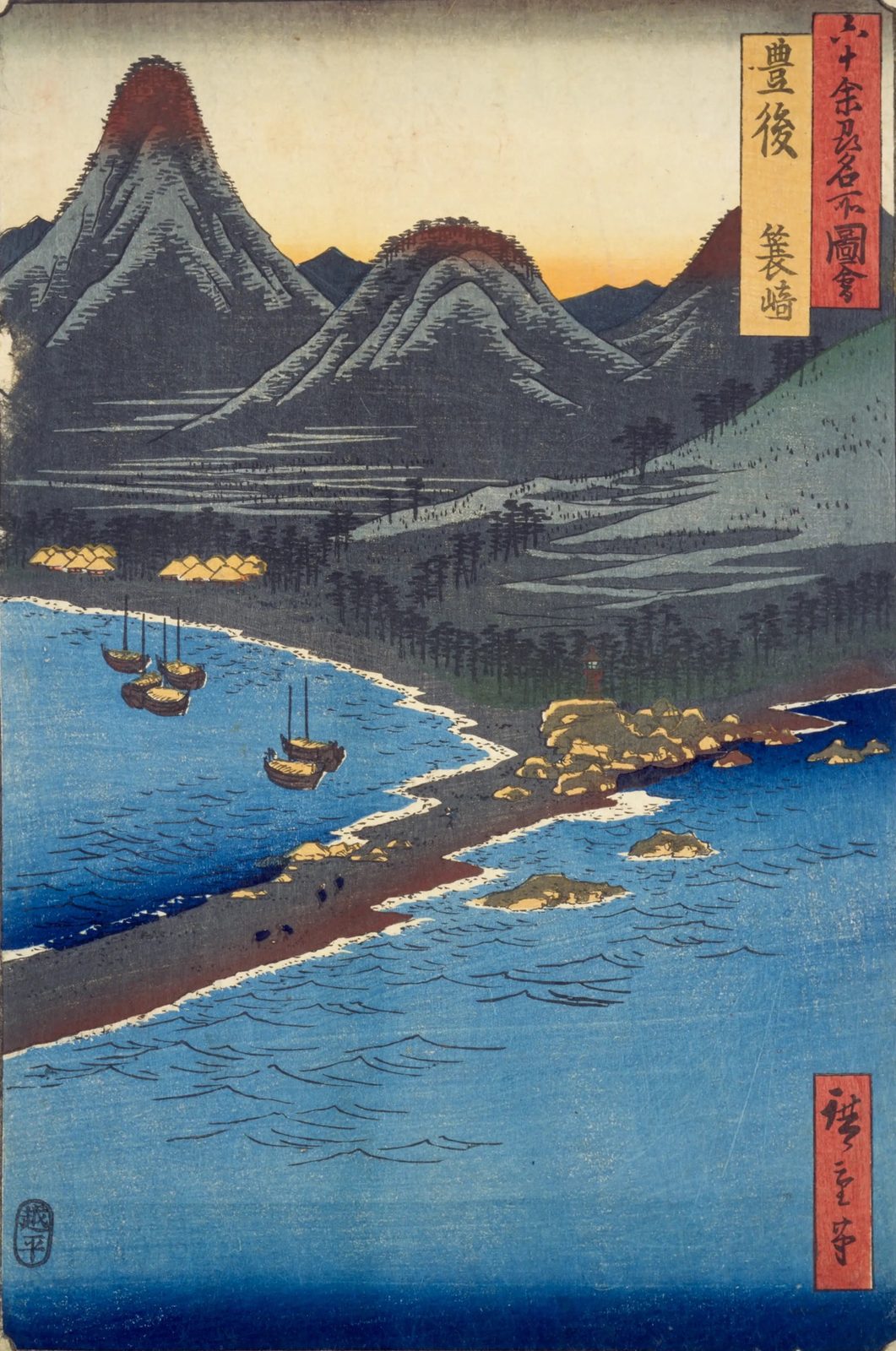
- Color woodblock prints by Utagawa Hiroshige from 六十余州名所図会 (Famous Places in the Sixty-odd Provinces), 1853–1856: Sarashina in Shinano, Minosaki in Bungo, Rakan-ji in Buzen, Aburatsu in Hyūga, and Nagasaki in Hizen. National Diet Library Digital Collections, public domain (cropped to the printed image).
- Kyushu and Shikoku: 大日本國全圖 (Complete Map of Great Japan), 19th century, color-printed. National Diet Library Digital Collections, public domain (detail, rotated so north is up).
- The photograph in our sample Document Reading: National Diet Library, Akamatsu Noriyoshi Papers, public domain.
The National Diet Library states that public-domain items in its Digital Collections may be reused without permission, with credit.
Start with your family name
No koseki needed. Your ancestor's surname and town or village are enough for a Roots Snapshot ($29). If you know only the prefecture, we can still begin, though for common surnames this may not narrow down to one town.