How to find your ancestor's honseki (registered domicile)
If you want to request your Issei great-grandparent's koseki, the hardest part is often not the request itself. It is the address. Japanese registers are filed by honseki (本籍), the registered domicile, and a city office cannot search the whole country for a name. This guide walks through where Nikkei families in the US, Hawaii, Canada and Brazil usually find the honseki. It also shows how to turn what you find into an address a Japanese city office can use today.
1. Why the honseki matters
A koseki records a household: the head of the family, spouse, children, and often parents, siblings and in-laws, with births, marriages, adoptions and deaths. It is kept by the municipality of the honseki, not the place where the family actually lived. The two were often the same for rural families in the Meiji era (1868–1912), but not always. Someone could live in Osaka or in Hawaii for decades while the family register stayed in the home village.
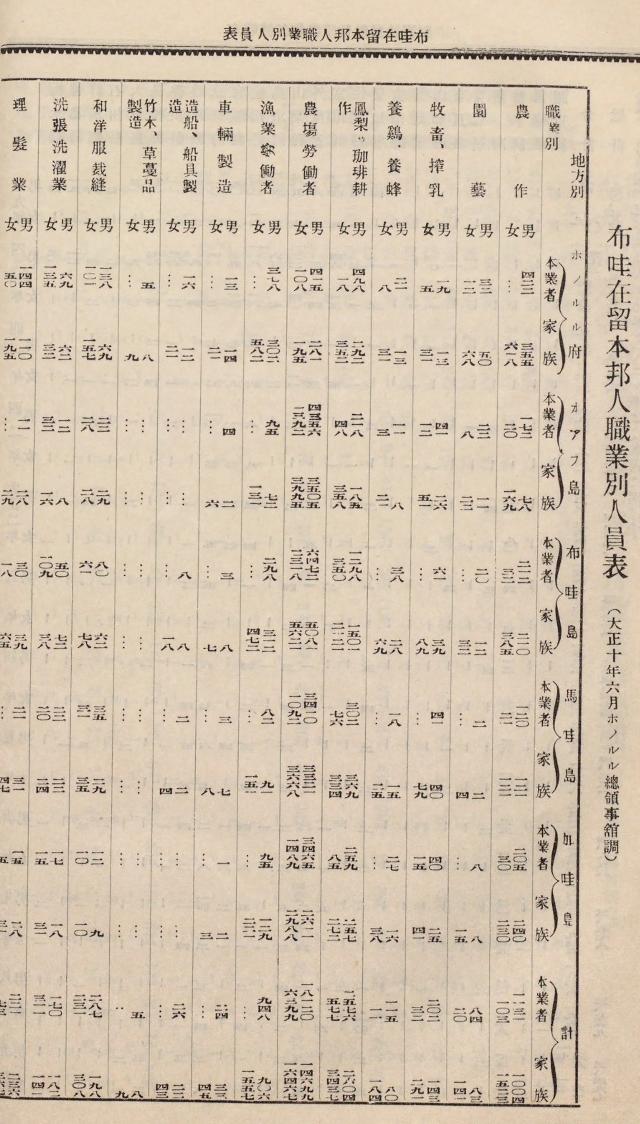
For descendants abroad, that is good news. An Issei who left for Honolulu, Seattle, Vancouver or Santos usually stayed on the register in the home village. That register is still kept by whichever office is responsible for the village today.
To make a request you generally need:
- The prefecture, district (郡, gun), and village or town, ideally with the lot number (番地, banchi)
- The name of your ancestor, or of the head of the household, in kanji
You will rarely find everything in one document. Most families piece it together: the prefecture from one record, a romanized village name from another, the kanji from a gravestone or a letter.
2. Start at home
Before ordering any archive record, look carefully at what your family already has. Japanese-language papers that look meaningless to an English or Portuguese reader are often the most useful.
- Japanese passports and emigration papers. Old passports and passport applications are among the documents genealogists most often suggest checking for the honseki. If an Issei's passport survives in a drawer or a scrapbook, it may give you most of the answer.
- Letters and envelopes from Japan. Return addresses on letters from relatives who stayed behind often point to the home village, sometimes down to the lot number.
- Butsudan (family altar) tablets and memorial papers. Ihai (位牌) memorial tablets and temple papers can give names in kanji and sometimes the name of the family temple, which ties the family to a place.
- Gravestones. Issei graves in Hawaii, California, British Columbia and Brazil often carry kanji names, and some include the prefecture or village of origin. A clear photo of every side of the stone is worth taking.
- Photographs. The backs of studio photographs sent from Japan sometimes carry the photographer's town.
- Relatives. Ask older family members, and cousins from other branches, what they remember and what papers they hold. One branch of a family often kept the documents that another lost.
3. Records outside Japan
If nothing at home gives the village, records created in the country your ancestor settled in can. Most give the prefecture; some give the village in romanized form.
| Source | Where | What it can show |
|---|---|---|
| Hawaii ship passenger manifests to 1900 | Hawaii State Archives (Japanese passenger index) and FamilySearch | Name and often place of origin, as the clerk heard and wrote it |
| Honolulu passenger lists from 1900 | FamilySearch and Ancestry (from US National Archives microfilm) | Name, age, and often last residence or birthplace |
| Japan emigration records, 1893–1941 | FamilySearch index of passenger lists kept by Japan's Diplomatic Archives | Emigrant names and places of origin |
| Naturalization records | US National Archives and courts; FamilySearch has Hawaii naturalization records | Birthplace and date. Issei could not naturalize until the Immigration and Nationality Act of 1952, so look for files from after that year. |
| WWII incarceration records of Japanese Americans | US National Archives (War Relocation Authority records, Record Group 210) | The WRA Form 26 data and individual case files can include birthplace and parents' birthplace |
| Japanese Canadian records | Library and Archives Canada; Landscapes of Injustice (University of Victoria) for wartime files | Immigration and citizenship records often give place of birth |
| Japanese consulate registrations | Family papers in Brazil, Peru and elsewhere | Families who registered births or marriages with a Japanese consulate often have papers that state the honseki |
| Kenjinkai records | Prefectural associations | Member lists and anniversary books can name a town or village (see our kenjinkai guide) |
A few practical notes:
- Search with spelling variations. Hawaii's manifests were handwritten, and indexes reflect how someone read that handwriting. Try different spellings of both the surname and the place.
- Use both the database and the paper record. The US National Archives notes that its online database of WRA Form 26 data contains less than the paper forms, so the original record may hold details the database leaves out.
- Be ready for hard reading. Wartime records of Japanese Americans and Japanese Canadians document a painful period, and they can use language that is offensive today. Library and Archives Canada warns researchers of this directly. Take your time with them.
- They may be all that survives. Many families lost or destroyed Japanese papers during the war, so these records are sometimes the only place a birthplace is written down.
4. From romanized name to kanji
Most records outside Japan give the village in Roman letters, spelled by an English-speaking clerk. To find the register you need kanji, and that step is where many searches go wrong.
- One sound, many spellings. Long vowels were written in different ways or dropped completely, so Ōshima might appear as Oshima, Ohshima or Ooshima. Clerks also misheard sounds or mixed up the village with the district or the prefecture.
- One spelling, many kanji. A name like "Ono" can be 大野 or 小野. There are many villages with the same reading in different prefectures, and sometimes in the same prefecture.
- Village vs. hamlet. Records sometimes give the name of a small hamlet (字, aza) within a village rather than the village itself. The register is filed under the village.
Work with the prefecture and district first:
- If you know your family came from Yamaguchi, for example, check which old villages in Yamaguchi have a reading that matches the romanized name, and narrow down from there.
- Japanese Wikipedia pages for districts usually list the villages that existed after 1889, with their kanji.
- Kanji names in the family (from gravestones or tablets) also help: some surnames are concentrated in particular areas, which can help you choose between candidates.
Our guide Where does your Japanese surname come from? explains how to use that kind of evidence carefully.
5. From old village to today's municipality
Even with the right kanji, the village you find may not exist anymore. Japan reorganized its municipalities in three large waves, each named after the imperial era in which it happened (Meiji, 1868–1912; Shōwa, 1926–89; Heisei, 1989–2019):
- The Meiji mergers (1888–1889), when the modern municipal system was created and more than 70,000 small settlements were combined into about 15,800 cities, towns and villages. Most of the village names your Issei ancestor used date from this system.
- The Shōwa mergers (1953–1956, with mergers continuing into the early 1960s), which cut the number of municipalities from about 9,900 to under 3,500.
- The Heisei mergers (from 1999 into 2010), which reduced the number again, from over 3,200 to around 1,800 by 2006, with more mergers after that.
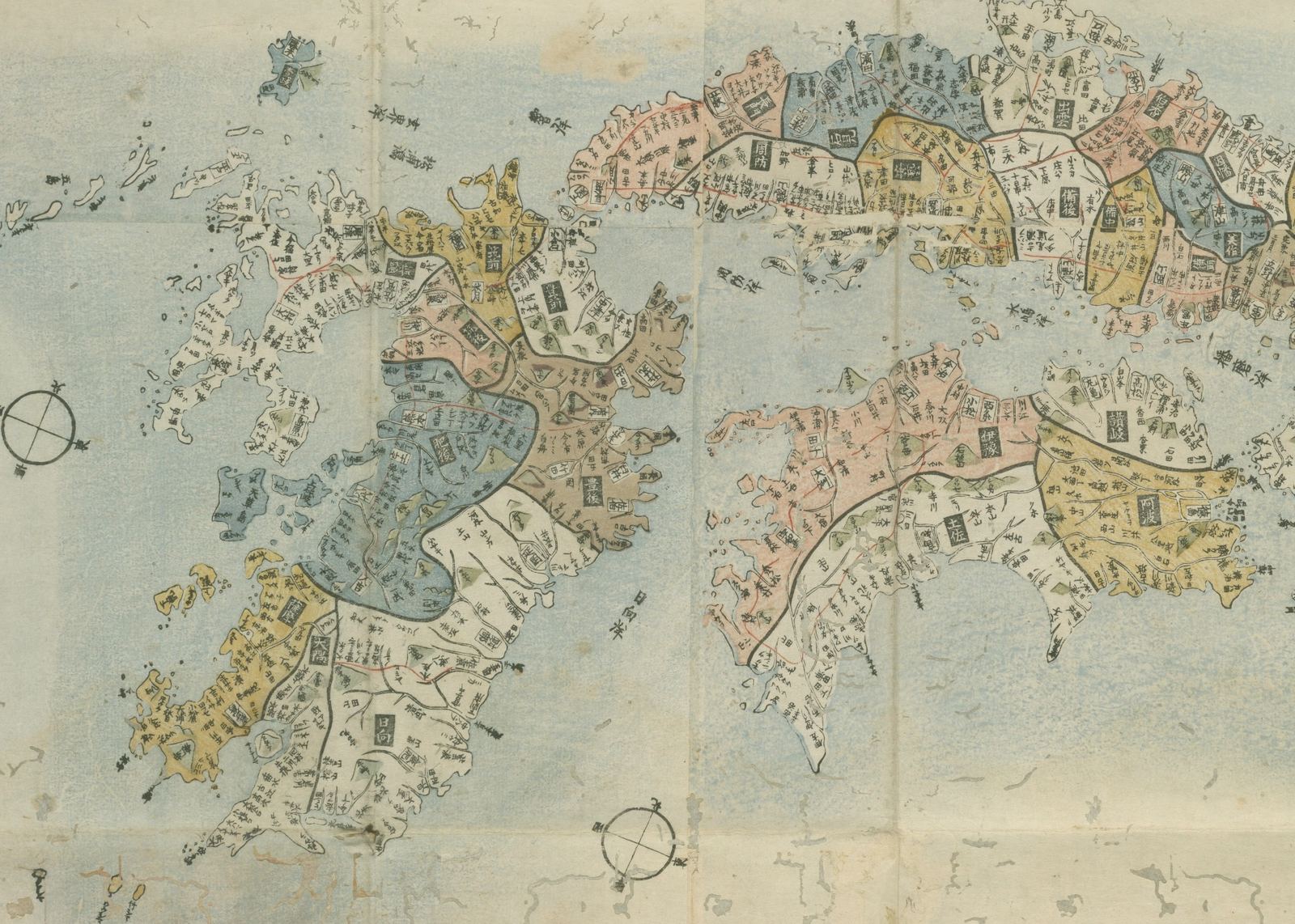
So a village from 1900 may have been merged into a town in the 1950s, and that town into a city in the 2000s. Its registers moved each time and are now held by the current city or town office, sometimes at a branch office (支所) in the old town.
To trace the line:
- Search the old village name in kanji on Japanese Wikipedia. Most former villages have their own page with a timeline of mergers, ending with the present municipality.
- Check that the page is for the right prefecture and district, since names repeat.
- On the current city's website, look for the family register (戸籍) section and any page about requests from abroad. Our guide How to get your ancestor's koseki from outside Japan covers the request itself.
In your request, write the old address exactly as you found it, and add the current name. City offices are used to old addresses and can usually find the register if the village and the kanji name are correct.
6. If you only know the prefecture
Many families only have one clue: "Grandpa was from Hiroshima," or "Okāsan's (Mother's) family were from Kumamoto." That is a real starting point, but on its own it is not enough for a koseki request. Here is how to narrow it down:
- Search immigration records for the whole family, not just one person. Siblings, cousins, and the person who sponsored a picture bride may each have records. One of them may give the village.
- Look at who your ancestors lived near. Emigrants often traveled and settled with people from the same village. Neighbors, witnesses on marriage records, and plantation or camp companions can point to the same place.
- Try the kenjinkai. Prefectural associations in Los Angeles, Honolulu, São Paulo and other cities gathered people from the same prefecture, and their records and anniversary books sometimes list members' hometowns.
- Use the surname as a clue, not a conclusion. If your surname is common in only a few parts of the prefecture, that is a reasonable place to look more closely. It does not prove anything by itself.
- Check family temple connections. If you know which Buddhist sect the family belonged to or which temple held memorial services, that can narrow the area.
Be patient. Many families find the village only after putting together three or four partial clues.
Want help finding where your family came from?
No koseki needed to start — a Roots Snapshot ($29) needs only your family name and your ancestor's town or village, or just the prefecture. It is a first look at where your surname is found in that prefecture and what that suggests. For common surnames, the prefecture alone may not narrow it down to one town. When you are ready for more, a Roots Report ($390) uses the clues you have to identify likely home villages and today's responsible city office, and includes a koseki request guide written for your family.
Related guides
- Glossary of Japanese family-history terms
- How to get your ancestor's koseki from outside Japan
- Where does your Japanese surname come from?
- From kenjinkai to your ancestral village
Sources
- Municipal mergers and dissolutions in Japan (Wikipedia)
- US National Archives: War Relocation Authority case files
- US National Archives: WWII-era records of Japanese Americans for genealogy
- Densho Encyclopedia: Form WRA-26
- FamilySearch: Japan, Emigration Records, 1893–1941
- FamilySearch: Hawaii, Collector of Customs, Ships' Passenger Manifests, 1843–1900
- FamilySearch: Hawaii, Naturalization Records, 1838–1991
- Densho Encyclopedia: Immigration Act of 1952
- Library and Archives Canada: Japanese Canadians